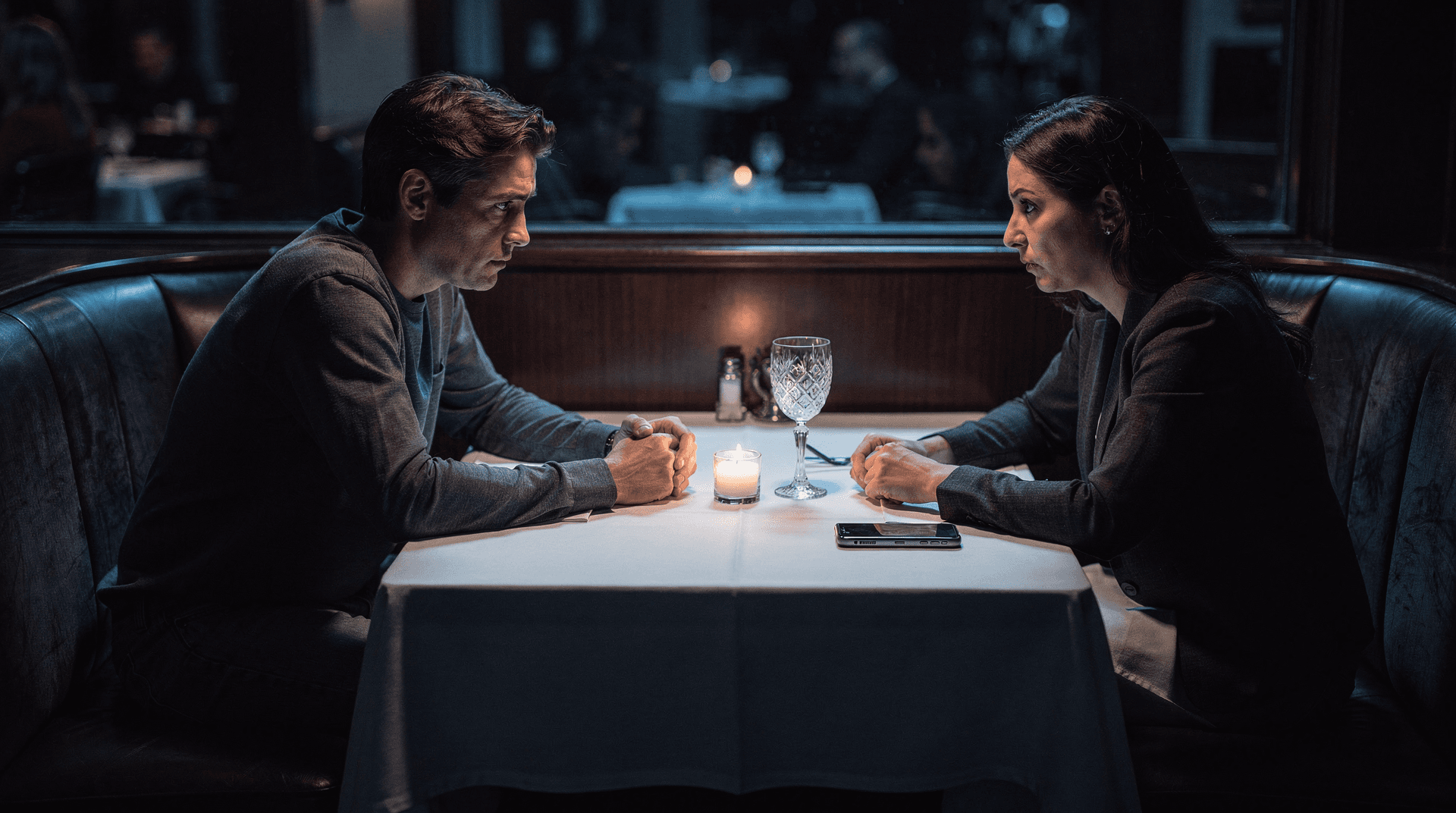
Infidelity Resilience: When Couples Stay After Cheating
The internet couldn't believe one content creator kept his relationship after cheating with multiple VTubers. The psychology behind why couples stay is more complex — and more human — than any viral tweet can capture.
If you were anywhere near the internet this month, you probably saw it: a tweet about a content creator who allegedly cheated with multiple VTubers, yet somehow remained in his relationship. The post racked up over 71,000 likes — the kind of engagement that doesn't come from casual interest. It comes from something hitting a nerve.
The quote tweets were a masterclass in disbelief. Dark humor. Moral outrage. And underneath all of it, a question people couldn't stop asking each other: Why would anyone stay?
It's a question that sounds simple. The answer is anything but. Because infidelity doesn't happen in a vacuum, and the decision to stay or leave after betrayal is one of the most psychologically complex choices a human being can make. Let's talk about what relationship resilience actually looks like — not the sanitized version, but the real, evidence-based, sometimes ugly truth.
The Staying Rate Is Higher Than You Think
Here's the number that shocks people every time: according to a 2025 meta-analysis of infidelity outcomes, approximately 60–75% of couples who experience infidelity choose to remain together — at least initially. That's not a typo. The majority stay.
Before you project your own feelings onto that statistic, sit with it for a moment. Three out of four couples, when faced with the immediate aftermath of betrayal, do not walk out the door. They sit in the wreckage and try to figure out what happened.
Now, "staying initially" is very different from "staying successfully." The same 2025 meta-analysis found that couples therapy roughly doubled the five-year survival rate post-affair — approximately 53% with formal therapeutic support, compared to just 25% without it. Staying is common. Staying well requires deliberate, structured work that most couples don't know how to do on their own.
This isn't about weakness or doormat behavior. It's about the reality that long-term relationships involve identity, shared history, children, finances, community, and a version of yourself that is intertwined with another person. Disentangling all of that is its own trauma. Sometimes staying is the harder choice — and sometimes it's the braver one.
Why the VTuber Angle Matters More Than You Think
The viral tweet didn't just tap into infidelity discourse — it collided with parasocial relationship culture in a way that made people's heads spin. Cheating with VTubers? For many people, that sentence doesn't even parse. How do you cheat with an avatar?
But the boundaries of betrayal have been expanding for years, and the data reflects it. A 2025 large-scale survey of over 8,200 respondents found that 67% classified emotional infidelity involving parasocial or digital-only relationships — including interactions with content creators, VTubers, and AI companions — as a genuine form of cheating. The generational split was striking: 78% of millennials considered sustained parasocial romantic engagement to be infidelity, compared to 54% of Gen Z.
That gap tells us something important. We are living through a period where the very definition of cheating is being renegotiated in real time. What counts as a betrayal is no longer limited to physical sex with another person. It includes emotional investment, secrecy, and the diversion of intimate energy — even when the "other person" exists behind a digital avatar or a screen name.
The Betrayal Is in the Breach, Not the Body
If your partner discovers you've been having sexually charged, emotionally intimate exchanges with someone online — VTuber, cam performer, Discord mutual, AI chatbot — the wound isn't hypothetical. It's real. The betrayed partner isn't upset about pixels. They're upset about the lie. The hidden life. The energy that was supposed to be shared.
This is why the VTuber cheating discourse felt so charged. It forced people to confront a question they'd been avoiding: Where are the walls of my relationship, and did we ever actually agree on where they are?
Most couples never have that conversation explicitly. And then one day, someone crosses a line the other person didn't know was negotiable.
What Betrayal Actually Does to the Brain
Let's move from the cultural moment to the clinical reality, because what happens inside a betrayed partner's nervous system deserves to be taken seriously.
A 2025 clinical review established "Betrayal Trauma Response" as a distinct symptom cluster — separate from generalized relationship distress — that warrants its own targeted treatment protocols. The review documented PTSD-like symptoms in 45–70% of betrayed partners: intrusive thoughts, hypervigilance, emotional numbing, difficulty sleeping, and a shattering of core assumptions about safety.
Read that range again. Up to seven out of ten betrayed partners experience something that looks clinically similar to post-traumatic stress. This is not drama. This is not "being too sensitive." This is a neurobiological response to the collapse of a foundational attachment bond.
If you've ever been cheated on and felt like you were losing your mind — checking their phone at 3 a.m., replaying conversations for clues you missed, unable to eat, unable to focus — you weren't broken. Your threat-detection system was doing exactly what it was designed to do when the person you trusted most became the source of danger.
And this is precisely why the internet's hot take of "just leave" is so inadequate. You can't "just leave" a trauma bond any more than you can "just stop" a panic attack. The nervous system doesn't take instructions from Twitter.
When Staying Actually Works: Post-Traumatic Growth
Here's where the story gets more nuanced — and, honestly, more hopeful — than most infidelity discourse allows.
A 2025 longitudinal study tracked couples who stayed together after infidelity disclosure and found something remarkable: couples who achieved what researchers call "post-traumatic growth" reported higher relationship satisfaction at three-year follow-up than their pre-infidelity baseline. They weren't just recovering. They were building something better than what they had before.
But — and this is a critical "but" — that outcome only occurred when both partners engaged in structured disclosure processes and individual therapy concurrently with couples work. Not one or the other. All three.
Let's break down what that looks like in practice, because "do the work" is one of those phrases people love to say without ever defining.
Structured Disclosure
This means the unfaithful partner provides a complete, honest account of what happened — not in a single devastating info-dump, but in a clinician-guided process designed to give the betrayed partner the truth they need without retraumatizing them further. Trickle truth — where details come out in agonizing increments over weeks or months — is one of the most destructive patterns in post-affair recovery. Structured disclosure replaces it with a painful but boundaried honesty.
Individual Therapy for Both Partners
The betrayed partner needs space to process their trauma response without having to manage their partner's guilt or defensiveness. The unfaithful partner needs to understand why — not in a way that excuses the behavior, but in a way that identifies the internal deficits, unmet needs, or avoidance patterns that made the affair feel like a solution. Without this individual work, couples therapy becomes a performance of accountability rather than the real thing.
Concurrent Couples Work
This is where the relationship itself gets rebuilt — not restored to its previous state, but constructed anew with clearer boundaries, more honest communication, and a shared understanding of what went wrong at the systemic level. The best post-affair couples therapy doesn't just address the affair. It addresses the relationship that made the affair possible.
What the Brain Looks Like When It Heals
The neuroscience of reconciliation is still emerging, but early findings are striking. Neuroimaging research published in 2025 demonstrated that betrayed partners who successfully reconciled showed increased prefrontal cortex activation during partner-related emotional processing at twelve-month follow-up.
In plainer terms: the brain shifted from a reactive, limbic-dominated response — the "fight or flight" mode that defines the early post-betrayal period — to a more regulated, executive-function-driven processing style. The partner's face, name, and presence stopped triggering alarm bells and started being processed through the part of the brain responsible for nuance, context, and deliberate decision-making.
This doesn't mean the pain disappears. It means the brain learns to hold the pain and the love simultaneously, without one obliterating the other. That's not forgetting. That's not denial. That's integration — and it's one of the most sophisticated things the human brain can do.
The Reasons People Actually Stay
The viral discourse tends to flatten the "why" of staying into two categories: weakness or delusion. The reality is far more textured. Here are the reasons clinicians and researchers consistently identify:
Attachment bonds are not rational. You can intellectually know someone hurt you while your nervous system still reaches for them as a source of safety. This isn't pathology — it's the architecture of human bonding.
Identity and narrative. Leaving means rewriting the story of your life. For people who built their identity around the relationship — especially those with children, shared careers, or deep community ties — the loss isn't just a partner. It's a version of themselves.
Genuine belief in repair. Some people stay because they've assessed the situation and decided, with full knowledge of the betrayal, that the relationship is worth rebuilding. This is not naivety. In many cases, it's the most clear-eyed decision they've ever made.
Fear and practical constraint. Let's be honest: some people stay because they can't afford to leave, or because leaving feels more dangerous than staying. This is especially true in relationships with financial abuse, coercive control, or immigration-status dependency. Resilience and entrapment are not the same thing, and conflating them does real harm.
The Line Between Resilience and Self-Abandonment
Not every decision to stay is resilience. Sometimes staying is a slow act of self-erasure — minimizing your own pain, accepting repeated boundary violations, performing forgiveness you don't actually feel because the alternative is too frightening to face.
Resilience looks like: processing the full weight of what happened, making a conscious choice to rebuild, holding the unfaithful partner accountable while also being open to genuine change, and maintaining your own identity and worth throughout the process.
Self-abandonment looks like: pretending it didn't hurt that much, accepting blame for the affair, allowing the unfaithful partner to control the narrative, and losing yourself in the project of "fixing" the relationship at the expense of your own well-being.
The difference isn't always visible from the outside. Which is exactly why 71,000 people could look at one couple's situation and project a dozen different stories onto it — because we don't know what's happening inside a relationship from a tweet. We barely know what's happening inside our own.
Redefining Boundaries in a Digital World
The VTuber scandal — absurd as it might sound to some — is actually a leading indicator of where relationship conflict is headed. As digital intimacy becomes more immersive (AI companions, VR experiences, parasocial bonds with creators who feel genuinely close), couples will increasingly need to have conversations that previous generations never imagined.
Is it cheating if it's with an AI? Does a VTuber girlfriend stream count as an emotional affair? What about a close Discord friendship that involves flirting but no physical possibility of meeting?
There are no universal answers to these questions. There are only the answers you and your partner arrive at together — explicitly, honestly, before someone gets hurt. The couples who thrive in the next decade won't be the ones who avoid digital temptation. They'll be the ones who talk about it openly, define their boundaries together, and renegotiate those boundaries as the landscape changes.
What This Really Comes Down To
The internet will always reduce infidelity to a binary: leave or be a fool. But human relationships have never been binary. They are messy, contradictory ecosystems where love and betrayal can coexist, where the decision to stay can be either the bravest or the most self-destructive choice a person makes, and where the only people who truly know which one it is are the people inside the relationship.
If the viral VTuber discourse taught us anything, it's that we're all desperate to understand the rules of love — and terrified that there might not be any. The truth is somewhere in between. There are no universal rules, but there are patterns. There is research. There is evidence about what helps couples heal and what keeps them stuck.
And the single most important predictor of whether a relationship can survive betrayal isn't the severity of the cheating. It's whether both people are willing to look at what's broken — in the relationship and in themselves — without flinching.
Not sure where your relationship boundaries actually are — or whether you and your partner are on the same page about the things that matter most? The BothWant compatibility quiz helps couples surface the assumptions they've never said out loud, from digital boundaries to emotional needs to long-term vision. It takes ten minutes and might save you from learning the hard way that you were playing by different rules.
Related reading
- Post-Betrayal Hypervigilance in New Relationships: A Guide
- The Strength Is Sexy Paradox: Independence Over Codependency
Wondering what you and your partner would both say yes to? Take the free five-question sample quiz →